Tom Kertes

Introduction
Tom Kertes is a certified teacher and an early childhood educator. He has taught Preschool, Kindergarten and Grade 1. He was an Instructor at Seneca College in Early Childhood Education in Toronto. Tom also was Policy Advisor to Ontario’s self-regulatory College of Early Childhood Educators. He was also an early childhood educator at the University of British Columbia in Vancouver.
Literacy Specialist
Holding a Master of Education in Educational Leadership, undergraduate degrees in Psychology and Indigenous Perspectives in Education, and an Early Childhood Education (ECE) Diploma, Tom Kertes is a literacy specialist with experience that includes preschool through high school teaching, post-secondary instruction, and adult professional development.
- Core Expertise: Literacy instruction, early childhood education, adult education, educational leadership, research methods, and the psychology of reading. (read more)
- Scope of Practice: Supporting literacy development across all age groups and skill levels — from foundational phonics and phonemic awareness to advanced literary analysis and essay writing.
Professional Experience
- Reading Specialist & Director of Learning Services
- Supported struggling older readers (Grades 4 and up) at a tutoring centre specializing in reading and writing supports.
- Supervised tutoring staff, administered entry assessments, and wrote, evaluated, and coordinated individual learning plans.
- Literacy Coach
- Partnered with teaching professionals and educators to develop and support reflective practice and help teachers implement effective literacy instruction strategies for students of all ages.
- Classroom Teacher (K–12)
- High School: English Department Chair, classroom teacher, and advisor for applied-literacy extracurriculars (including the Debate Team, Journalism Club, and Outdoor Club) at Charles Hays Secondary School and Gidg̱alang Ḵuuyas Naay.
- Middle School: Grade 7 Core Teaching and Drama 8 teacher at Prince Rupert Middle School.
- Elementary School: Grades K/1 and 4/5 teacher at Sk’aadgaa Naay Elementary and Tahayghen Elementary (in Haida Gwaii).
- College Instructor & Continuing Education Presenter
- Taught Early Childhood Education at Seneca Polytechnic (Toronto) and presented professional development courses through Spitzer-Smith Consulting (including accredited continuing education courses through Seattle Pacific University).
- Keynote Speaker
- Delivered keynotes and other presentations reaching thousands of educators across British Columbia – on early literacy, pedagogical narration, early childhood education, and learning-as-storytelling.
- Early Childhood Educator
- Served in infant, toddler, and preschool programs at the University of British Columbia Child Care Services, Pike Market Child Care Center, and Children’s Garden Preschool.
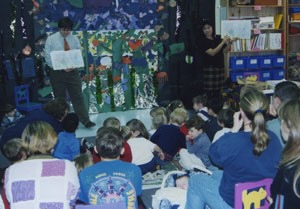
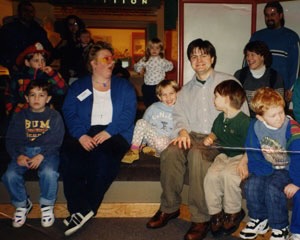
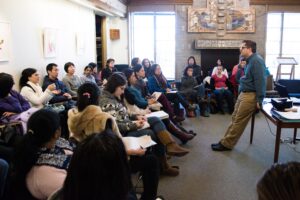
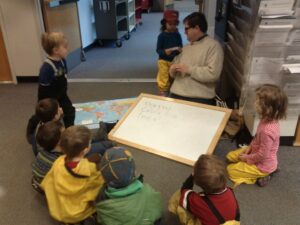



Instructional Strategies…
Forms of Literacy
Literacy takes on many forms, including…
- Music and ceremony
- Spoken stories
- Listening and speaking
- Mass media
- Books and blogs
- Conversations
- Reading and writing
- Information technologies
Being literate means knowing how to think and communicate, using your own language to speak up and be heard, and accessing the world of ideas and shared knowledge of human cultures. Being literate means be able to speak your voice powerfully and knowing how to learn through listening, reading, speaking, and writing — the powerful tools that are at the bedrock of literacy.
Teaching Literacy
There is no “one size fits all” approach to teaching literacy. Classrooms, schools, and communities adapt literacy supports to the needs and interests of their students.
Literacy is complex. It includes speaking, listening, reading, writing, and thinking. Literacy is also powerful. It is at the heart of culture and knowledge. That’s why literacy instruction is centred on relationships, community, and connections.
While not there’s not a “one size fits all” approach, the following skills and strategies can come together to help guide effective and supportive literacy instruction, providing a foundation for helping students learn reading, writing, storytelling, and other essential literacy skills and attitudes.
- Teach Literacy Everywhere
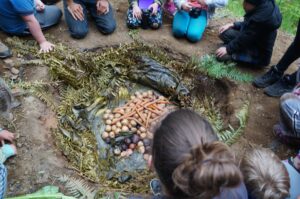
- Teach reading, writing, speaking, and listening everywhere — in the forest, during recess, on field trips, during math lessons, at school assemblies, as part of arts and crafts, and in relationship to all other learning.
- Make Literacy Fun
- It’s fun to figure out how things work, fun to play with sounds and words, and fun to explore with curiosity. At the heart of literacy is community, friendship, and being social.
- Since music, dance, play, art, storytelling, exploration, imagination, movement, and building things are all part of being a literate member of your community, these (and other fun activities) are at the foundation of learning literacy.
- Build Relationships Through Literacy
- Literacy helps you navigate your culture through language, ceremony, symbol, knowledge, and meaning. It is an inherently social activity.
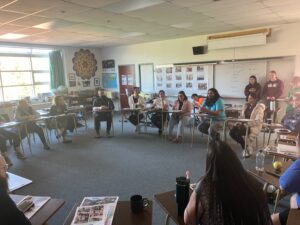
- Given this, literacy learning centres on relationships in the community of the learner, including with their family, friends, and other important people.
- Individual supports and adaptive approaches reflect the fact that students learn differently. The relationship between each student and their learning about literacy requires an individual (adaptive and supportive) approach to teaching literacy.
- Families, neighbours, peers, friends, and others in the community are important teachers for students. Literacy learning that centres on the child’s support network builds their community and recognizes the importance of the people who care about the student in supporting their learning.
- Literacy is inherently social, based in community, and therefore teaching literacy happens at the level of each child’s own community.
- Teach Core Reading and Writing Skills Explicitly
- Learning how to decode and encode written language is much easier for many learners when it’s taught through an explicit and systematic approach.
- Unlocking the particulars of the written code starts with learning how reading and writing systems function. To construct and comprehend written language, novice readers and writers benefit from mastering key foundational concepts, including:
- Phonemic awareness — understanding the individual sounds in spoken words and gaining familiarity with spoken language through word play and other early literacy activities
- Explicit phonics instruction — mapping sounds to letters and spelling patterns using the logic of our reading system
- Print conventions — learning how text is structured and organized, learning about genres, learning about the role of the author, and learning how to make sense from what you read
- Vocabulary development and constructive thinking — building a robust bank of word meanings and learning how to learn through reading and writing (including learning how to use reading and writing technologies)
- Demonstrate, Document, and Celebrate Progress
- For many students, learning to read and write is hard work. Showing students their own progress is motivating and helps students focus their attention and effort on the learning.
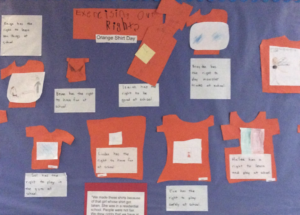
- Providing opportunities for students to show their progress, creating evidence that helps students see their learning, and celebrating growth and progress are important ways to encourage and recognize student learning.
- Demonstrate the Power of Literacy
- No matter your age, being literate increases your capacity to learn, to understand, to do things with intention, and to be heard.
- Beyond fun, beyond connection, and beyond the joy of hearing and telling stories, literacy is a powerful tool. Putting this tool to use is motivation for the work of learning how to read, write, speak, and listen as a literate member of your community.